What Cursor shipped
Cursor built its reputation on being the AI code editor that actually understands developer workflow. With Cursor 2.0, they push past mere autocomplete, introducing their first in-house coding model alongside a multi-agent, agent-first interface designed to handle complex, multi-step engineering tasks autonomously.
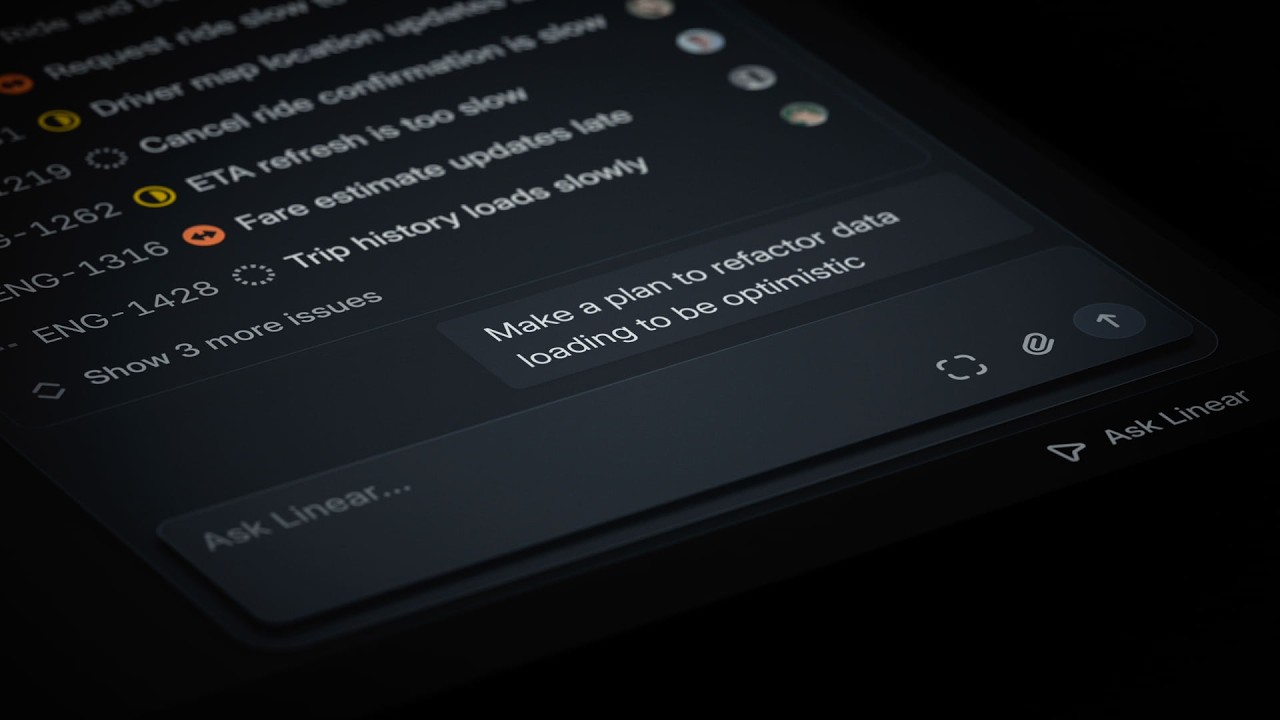
For a devtool launch, the challenge is always showing abstract logic and code execution without losing the audience in a wall of text. This video solves that by treating the interface itself as the hero, using sharp, deliberate motion to map out how multiple agents operate concurrently without overwhelming the viewer.
How the motion works
The visual language here is distinctly dark, focused, and technical. Instead of relying on abstract 3D metaphors to explain AI, the video uses aggressive punch-ins to drive attention directly to the code diffs. By scaling up specific lines of code right as the model generates them, the camera directs the viewer's eye exactly where the value is being created, stripping away the noise of the surrounding IDE.
To communicate the new multi-agent architecture, the motion design leans heavily on spatial organization. Parallel-agent panels are introduced using a precise stagger. As one agent begins a task, another slides into the layout, their entrances offset just enough to establish a rhythm. This staggering isn't just an aesthetic choice; it visually translates the concept of concurrency, proving the tool can handle parallel execution while maintaining a legible workspace.
Pacing is maintained through a combination of kinetic typography and hard cuts. Large, stark text labels lock into the frame to announce new capabilities, providing structural beats to the edit. The transitions between these typographic cards and the product UI rely entirely on hard cuts, avoiding crossfades or sweeping camera pans. This keeps the rhythm snappy and authoritative, ensuring the motion remains strictly subordinate to the product—exactly the right tone to earn the trust of a deeply technical audience.
What to steal from it
- Use punch-ins to isolate the exact moment of value creation in dense, text-heavy interfaces.
- Stagger the entrance of UI elements to visually explain concurrent processes without overwhelming the eye.
- Rely on hard cuts rather than elaborate transitions to maintain an authoritative, technical pace.
- Subordinate your motion design to the product itself when speaking to a developer audience.
Want a video like this for your product?
Impractical cuts one from a single prompt — the same motion craft, in about twenty minutes.